
What do we show
when we show design?
And what kind of institutions can sustain design beyond the event itself?
We invited design theorist and curator Emanuele Quinz to reflect on these questions: can design generate lasting forms of research, relationships and public life? Can cultural institutions become places where projects continue to evolve rather than simply conclude?
Unlike art, design is not created to be exhibited. Its reason for being liesin use—in the way it enters into relationships with bodies, spaces, gestures and everyday practices. A chair becomes meaningful when someone sits on it; a tool reveals its intelligence when it is handled; a public space comes alive through the people who inhabit it.
To exhibit design therefore means performing an act of transformation. It means temporarily suspending an object’s function in order to make it visible. But visible in what way? And for what purpose?
These questions have become increasingly urgent at a time when design is exposed more than ever before. Over the last decades, Design Weeks have multiplied across the world, creating a global infrastructure dedicated to making design visible. Every year, cities, institutions, companies and creative communities produce hundreds of exhibitions, installations, talks and events.
This extraordinary proliferation seems to reflect a growing public interest in design. But does it really deepen our understanding of design? Or does it simply generate another form of dispersed attention?
The economy of attention
In Disordered Attention: How We Look at Art and Performance Today (2024), Claire Bishop argues that one of the defining challenges of contemporary aesthetics is no longer what we produce, but how we pay attention.
Living within digital environments saturated with images, notifications and constant stimulation, we can no longer assume that viewers arrive ready to contemplate. Attention has become fragile, contested and continuously interrupted.
Within this economy of attention, visibility often becomes the primary measure of value. Cultural events compete to capture increasingly limited time and focus, encouraging formats designed to generate immediate impact rather than sustained engagement.
The result is paradoxical. We have access to more design than ever before, yet we often spend less time truly experiencing it.
French philosopher Yves Citton proposes another way of thinking about this condition. Rather than treating attention as a scarce resource to be captured, he invites us to imagine an ecology of attention: an environment collectively shaped by institutions, spaces and cultural practices.
The question is no longer how to attract more attention, but how to cultivate better forms of attention.
Beyond visibility
This distinction becomes especially relevant when considering the proliferation of Design Weeks.
More exhibitions do not necessarily produce more understanding. While communication around these events extends for months through digital platforms and editorial narratives, the direct experience often remains compressed into only a few days—and sometimes into little more than a rapid succession of impressions.
The issue is therefore not quantitative. It concerns the kind of attention that cultural institutions are capable of producing.
As Boris Groys argues in The Politics of Installation, exhibition is never a neutral act. It changes the status of what is displayed.
Objects do not simply move from one space to another; they enter new systems of interpretation, acquiring meanings shaped by institutions, curators and exhibition design.
For design, this shift is particularly significant.
An object originally conceived within material culture—through function, technique and everyday use—risks becoming primarily an image. Its symbolic and communicative value begins to outweigh the practical relationships that originally defined it.
This raises an essential question for contemporary design.
When an object leaves the world of use and enters the world of representation, what remains of its identity as design?
Exhibitions can certainly reveal dimensions of a project that everyday use cannot: research processes, production methods, political positions and systems of value. Yet they can also privilege representation over practice.
The challenge is therefore not whether design should be exhibited, but how exhibitions might preserve the project’s fundamentally relational nature.
Five ways of making design public
Today design is presented through different institutional formats, each producing a different form of public experience.
The fair presents design as product. Its logic is competitive, market-oriented and driven by visibility.
The archive presents design as document, revealing sketches, prototypes and traces of research that normally remain invisible.
The museum presents design as monument, placing objects within longer historical narratives and transforming them into cultural heritage.
The event presents design as situation. Festivals, biennials and Design Weeks build temporary communities around shared experiences. Their strength lies in creating encounters, conversations and collective energy—but their very intensity also contains a contradiction: communities formed over a few days often dissolve just as quickly.
There is, however, another model.
The workshop presents design as process.
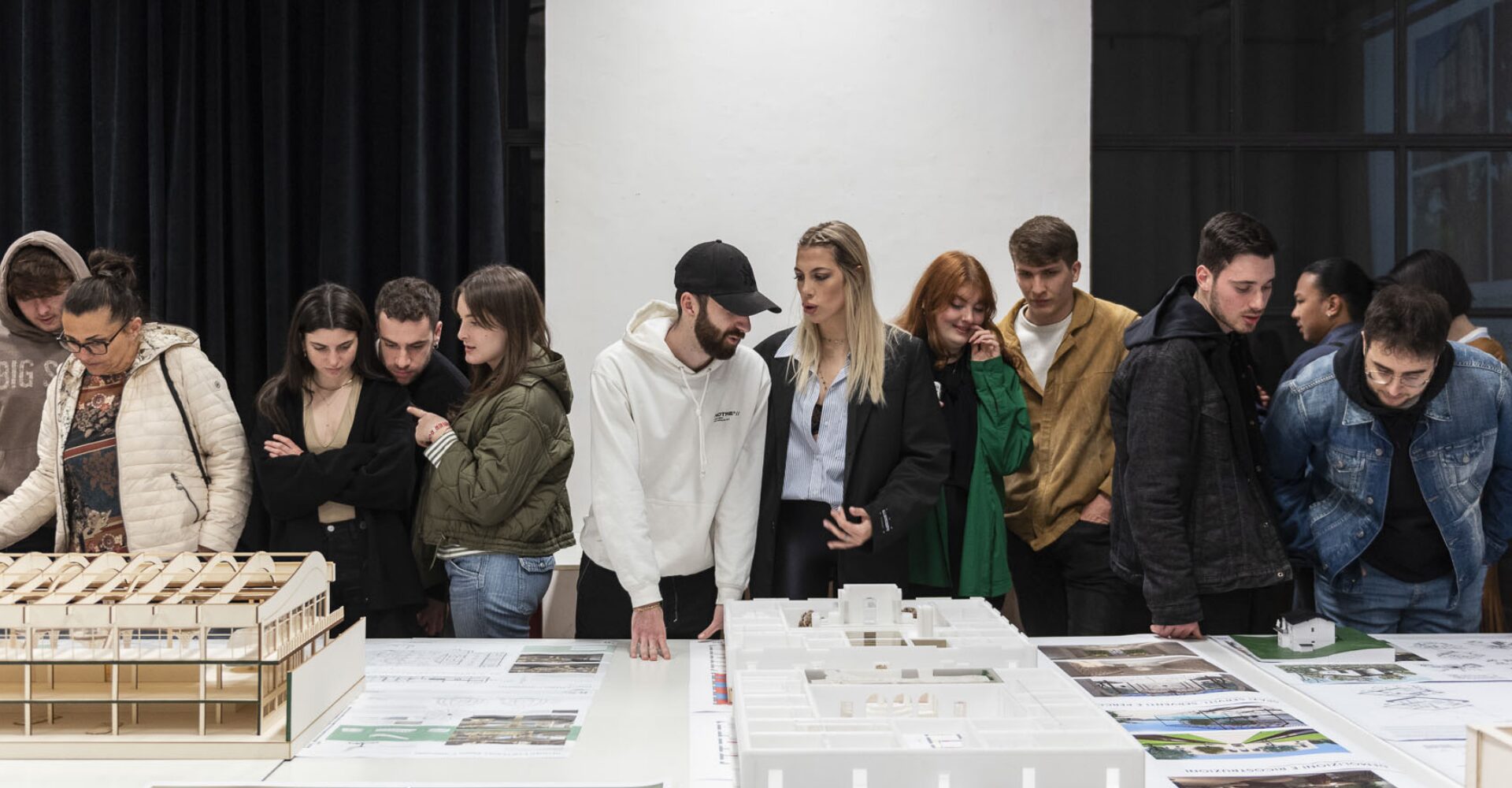
Rather than exhibiting finished results, it makes research itself public. Ideas, experiments, failures and revisions become part of the exhibition. Production and presentation begin to overlap, transforming spectators into participants.
Here attention is not captured.
It is cultivated.
From events to infrastructures
Perhaps this is where the future of Design Weeks lies.
Not in becoming larger, more spectacular or more visible, but in becoming infrastructures capable of producing effects that continue long after the event itself has ended.
Design institutions can become Cultural Outposts: places that do not simply host programmes but sustain relationships, research and communities between one edition and the next.
Moving beyond Design Week does not mean extending a week indefinitely.
It means changing the institutional model that supports it.
It means moving from a culture of presentation to a culture of research; from the accumulation of events to the construction of continuity; from an economy of attention to an ecology of research.